
 Tools
ToolsWeb App Architecture That Scales When You Need It
Prototype in weeks with a modular monolith, trace key flows, and extract services only when a module must scale or need stricter isolation. Kreante...
JorgeSeptember 5, 2026Read the article
Run an i18n-first 90 day MVL pilot: externalize strings, add pseudolocalization to CI, localize store listings, then measure retention and conversion by...

An app localization strategy adapts your product, store presence, and operations for specific locales, not just your interface text. The right sequence is internationalization first, a signal-driven minimum viable localization (MVL) pilot in one or two markets, then continuous localization backed by linguistic QA. Start this week by running a localization signal audit on your analytics and turning on pseudolocalization in your build.
TL;DR:
Localizing store metadata and screenshots yields the fastest measurable increase in downloads and should be prioritized before full app translation.
Internationalization tasks, such as externalizing strings and supporting right-to-left layouts, must be completed before translation to prevent costly rework later.
Running pseudolocalization builds early helps identify layout and string issues, reducing bugs before real translations are added.
A 90-day pilot involving market signal audit, MVL implementation, and performance measurement can validate localization ROI and inform scaling.
Continuous localization supported by a translation management system and CI/CD integration reduces costs and streamlines updates across multiple markets.
Kreante
Build A Localization-Ready App
Kreante maps where AI can improve your app, then builds the web or mobile systems that move your business numbers.
Translation is the smallest part of app localization, not the whole job. A real localization effort touches every layer of the product a user actually interacts with, plus the systems behind it that most product teams forget until launch week.
Here’s what actually falls under the umbrella:
Skip any of these and you get an app that reads fine in the target language but feels foreign to use. That’s the gap between translation and localization.
The payoff shows up at every stage of the funnel. Localizing metadata and screenshots is often the fastest route to measurable ROI because it affects the moment a user decides whether to tap “install” at all, before they’ve experienced a single screen of your product. Teams that localize store listings early tend to see outsized download gains relative to the effort involved, according to guidance from Marketing For Apps. Netflix built its entire international growth model around adapting content and product experience market by market, expanding to 190 countries over seven years through deliberate, staged localization rather than a single global release, according to Harvard Business Review.
Beyond installs, localization affects retention and revenue too. Users who hit a payment screen that only accepts a currency they don’t use, or a date format that reads backward, tend to churn faster and rate the app lower. Watch for three signals that a market is worth localizing: organic installs climbing without any local marketing spend, unusually high support ticket volume in a language you don’t officially support, and paid campaigns in a region converting well until users hit the app itself.
Localization fails when i18n is skipped. You cannot translate an app that has strings baked into Java files, dates hardcoded as MM/DD/YYYY, or layouts that assume every word is short enough to fit a button designed for English.
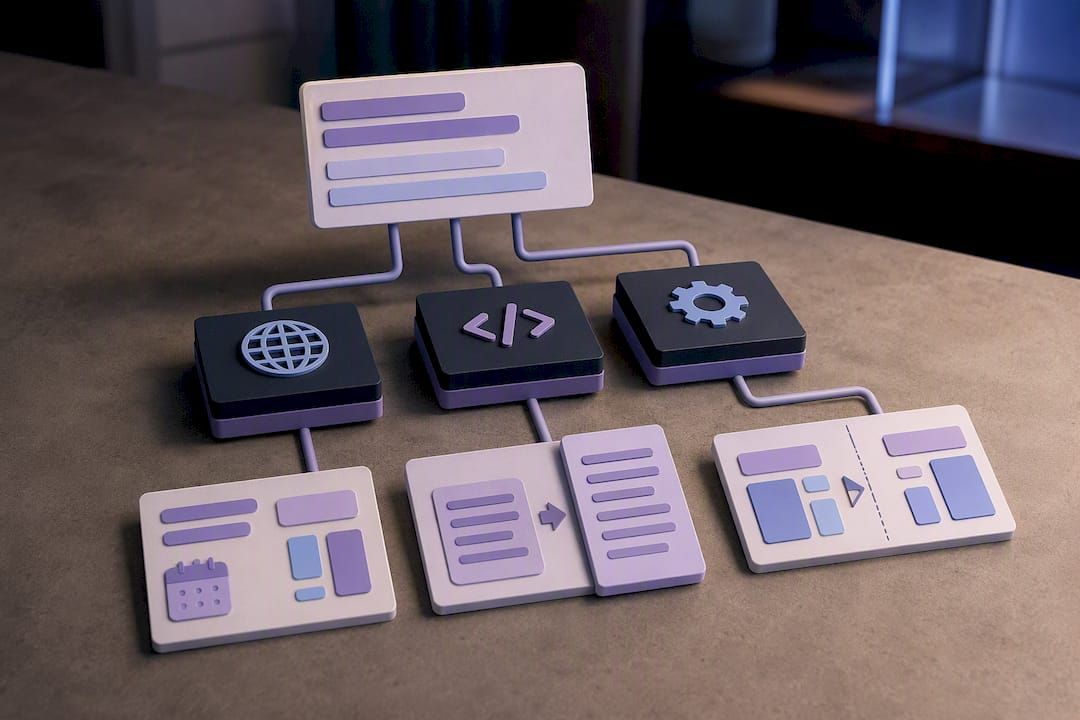
Internationalization is the engineering work that makes translation possible later without a rewrite. It has to happen before a single word gets sent to a translator.
Pro Tip: Run a pseudolocalization build before you write a single line of translated copy. It will surface every hardcoded string and broken layout for free, weeks before a translator ever touches your app.
The core engineering tasks, in order:
res/values/strings.xml rather than hardcoding it in layouts or activities, per Android’s developer documentation. iOS teams do the equivalent with .strings and .stringsdict files.values-fr/, values-ja/ pattern (and iOS’s .lproj folders) let the OS pick the right resource set automatically at runtime.A practical sequence that engineering leads at Techgroup21 recommend: externalize strings, implement locale-aware formatters, wire pseudolocalization into CI, connect a translation management system for automatic extraction, then gate releases on LQA sign-off. Do these five things in order and every localization project after the first one gets dramatically cheaper.
Not every market deserves the same investment, and treating them as equal wastes budget on regions that were never going to convert.
Start with demand signals you already have sitting in your analytics dashboard. Organic installs from a country you never marketed in, above-average session length from users on non-English devices, a spike in App Store or Play Store reviews written in another language. Support ticket volume in an unsupported language is a particularly strong signal because it means people are already trying to use your app and hitting friction.
Layer operational criteria on top of demand:
Once you’ve picked a market, decide depth. Industry playbooks recommend starting with Minimum Viable Localization (MVL) in one or two high-signal markets before committing to full localization, according to Lokalise’s localization strategy guide. MVL covers the store listing, core UI strings, and critical flows (onboarding, checkout, account creation). Full localization adds cultural adaptation of imagery, region-specific content, customer support in-language, and marketing campaigns built for that market rather than translated into it.
Roll out MVL, run it for four to six weeks, and measure store conversion and Day 7/Day 30 retention against your non-localized baseline before deciding whether to invest further. A pilot that beats baseline retention by a clear margin earns full localization budget. One that doesn’t tells you the market problem wasn’t language.
Treating localization as a one-time project before a big launch is the single most common reason it becomes expensive and painful. Continuous localization with CI/CD integration and a translation management system (TMS) turns it into an ongoing service that runs alongside every sprint instead of a scramble before release week.
A TMS is the hub that makes this possible. The features that matter most:
The pipeline itself typically runs: string extraction from code → routing to machine translation or professional translators → in-context human review → automated pull request → CI build validation → merge. Once this loop exists, adding a new language is a configuration change, not a project.
Pro Tip: Reserve human translators for anything a user reads in a moment of decision (onboarding copy, paywall text, push notifications) and let machine translation with light post-editing handle settings menus, legal boilerplate, and low-visibility strings. This is where most of the cost savings live without touching quality anyone notices.
Modern localization blends automation and human judgment deliberately rather than picking one approach for the whole app. Routine, high-volume text goes through machine translation with post-editing; anything tied to brand voice or conversion gets a human reviewer working in context. For file formats, stick to standard, tooling-friendly formats. Android’s strings.xml, iOS’s .strings/.stringsdict, and JSON for cross-platform frameworks all integrate cleanly with most TMS platforms and avoid the custom-parser headaches that come from inventing your own format.
Skipping LQA is how apps ship with a button that says “Submit” in German but overflows its container, or a date field that silently breaks checkout in one specific locale. LQA catches what translation alone cannot.
Run it in two passes:
%s and {{variable}} survived translation intact. A broken placeholder is a crash waiting for a specific locale, and it’s one of the most common launch-week failures.Gate release sign-off on both passes clearing, with clear ownership: engineering owns pseudolocalization and functional QA, a localization lead or PM owns linguistic sign-off, and no build ships to a new locale without both checked. Disciplined process here, including terminology control and frozen source builds before translation starts, meaningfully reduces rework according to Globalization Partners’ localization guide.
Your store listing is the first localized experience most users ever have with your app, and it’s often the highest-leverage place to start.
The assets worth localizing, roughly in priority order:
Google Play Console now offers automatic machine translation, including Gemini-powered translation, for both store listings and in-app strings, with a preview-and-edit workflow before anything goes live, according to Google’s Play Console documentation. That’s a fast starting point, but always preview and edit the machine output. Auto-translated keywords in particular tend to be literal rather than search-optimized, and what ranks in English search volume rarely maps directly to what people actually type in Japanese or Portuguese.
Research keywords per locale independently rather than translating your English keyword list. Play Console also supports country-specific custom store listings, worth using when a market has a genuinely different value proposition or competitive landscape. Track store-listing performance the same way for every locale: conversion rate from listing view to install, broken out by locale rather than blended into a global average.
Localization without measurement is a guess dressed up as a strategy. Track performance by locale from day one of any pilot, never as a blended global number.
Primary metrics worth a dashboard of their own:
Pair those with diagnostic metrics that explain why the primary numbers move: support ticket volume and topic by language, review sentiment analysis by locale, and keyword rank movement in each store’s search results.
Statistic Callout: Localizing store metadata and screenshots is frequently cited as the fastest path to measurable download lift among all localization investments, according to Marketing For Apps, which makes store-listing work a logical first experiment before deeper product localization.
Run two experiment types before scaling any market. First, A/B test localized store creatives against your default listing to isolate the store-listing effect specifically. Second, soft-launch MVL in a new market against a non-localized control cohort to measure the product-level lift once users are inside the app. Report everything segmented by locale and compared like-for-like against a genuine baseline, not against your overall global average, which will hide problems in your smallest markets and mute wins in your best ones. A framework for structuring this kind of KPI reporting is covered well in this guide to measuring digital performance.
Most localization projects don’t fail because of bad translation. They fail because of predictable process mistakes that show up on nearly every project the same way.
The recurring failure modes:
The mitigations map directly to the problems: continuous localization instead of project-based localization, pseudolocalization to catch bugs before translation even starts, a reviewer staffing plan built into sprint planning rather than sourced at the last minute, and automated placeholder validation in CI. For cost control specifically, lean on translation memory to avoid repaying for repeated strings, prioritize which screens get full localization based on actual usage data, and start with MVL to cap early spend until a market proves itself.
A 90-day localization pilot has a clear shape: audit, build MVL, measure, then decide.
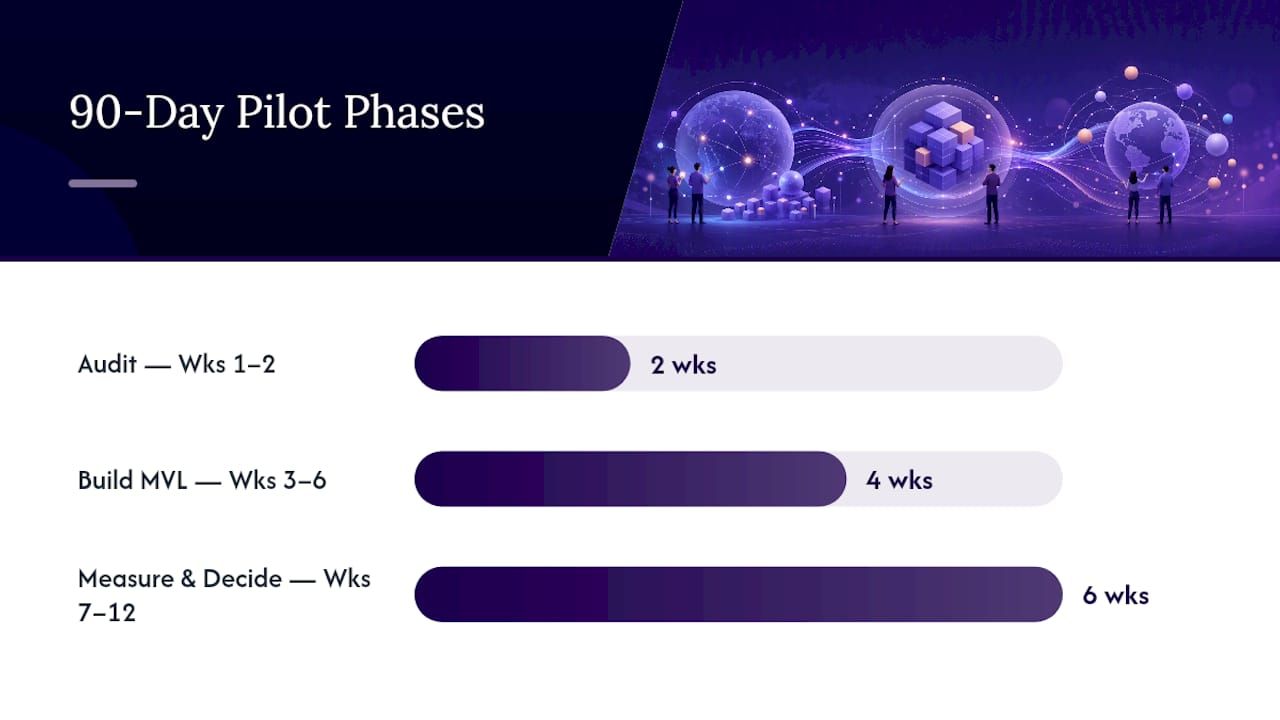
Week 1 to 2: run a localization signal audit. Pull organic installs by country, support tickets by language, and review sentiment by locale from your existing analytics. Set acceptance criteria upfront, for example a market needs organic installs plus support friction in that language before it earns a pilot.
Week 3 to 6: build MVL for one market. The checklist:
Week 7 to 12: measure and decide. Compare store conversion and retention against your baseline; scale only if the pilot clears it.
Pro Tip: Treat your first market pilot as a rehearsal for your process, not just a bet on one country. The engineering and workflow kinks you fix in market one are what make market five take a fraction of the time.
This audit-to-roadmap-to-build sequence is a recommended approach for localization engagements: map where the return actually is, build the smallest working prototype that tests it, then scale the build once the number moves. It’s the same rapid-prototyping approach documented in Kreante’s SmartCab case study, and the string, asset, and publishing groundwork lines up closely with the steps in First Steps to Successfully Publish Your App.
Localization projects stall when everyone assumes someone else owns the decision. A working model assigns clear ownership across four roles.
Product managers own market prioritization and the business case: which locales get budget, what MVL includes, and when a pilot has earned full localization investment. They’re the tie-breaker when engineering wants to slow down for more i18n cleanup and marketing wants to ship faster.
Engineering leads own i18n readiness, the CI pipeline, pseudolocalization, and the technical side of TMS integration. This role is accountable for the checklist covered earlier: externalized strings, locale-aware formatters, RTL support, and placeholder validation.
Localization leads or coordinators (sometimes a contractor, sometimes in-house) manage the TMS, brief reviewers, maintain the glossary, and run linguistic QA sign-off. On smaller teams, a PM often absorbs this role temporarily during the first pilot.
Marketing and ASO owners handle store listing localization, keyword research per locale, and localized creative testing, working closely with whoever owns analytics to read store conversion data by locale.
The collaboration model that works best treats these as a standing cross-functional pod rather than a committee that meets once before launch. A weekly sync during an active pilot, with a shared dashboard tracking the metrics from the measurement section, keeps string freezes, reviewer bottlenecks, and scope creep visible before they become schedule problems.
Translation gets the words right. Cultural adaptation gets the experience right, and it’s the layer most teams skip until a market underperforms for reasons nobody can immediately explain.
Imagery and photography carry cultural weight that doesn’t survive a straight swap. A hero image showing a Western-style office or a specific hand gesture can read as neutral in one market and off-putting or even offensive in another. Review every screenshot, icon, and onboarding illustration for a target market rather than assuming visuals are language-agnostic.
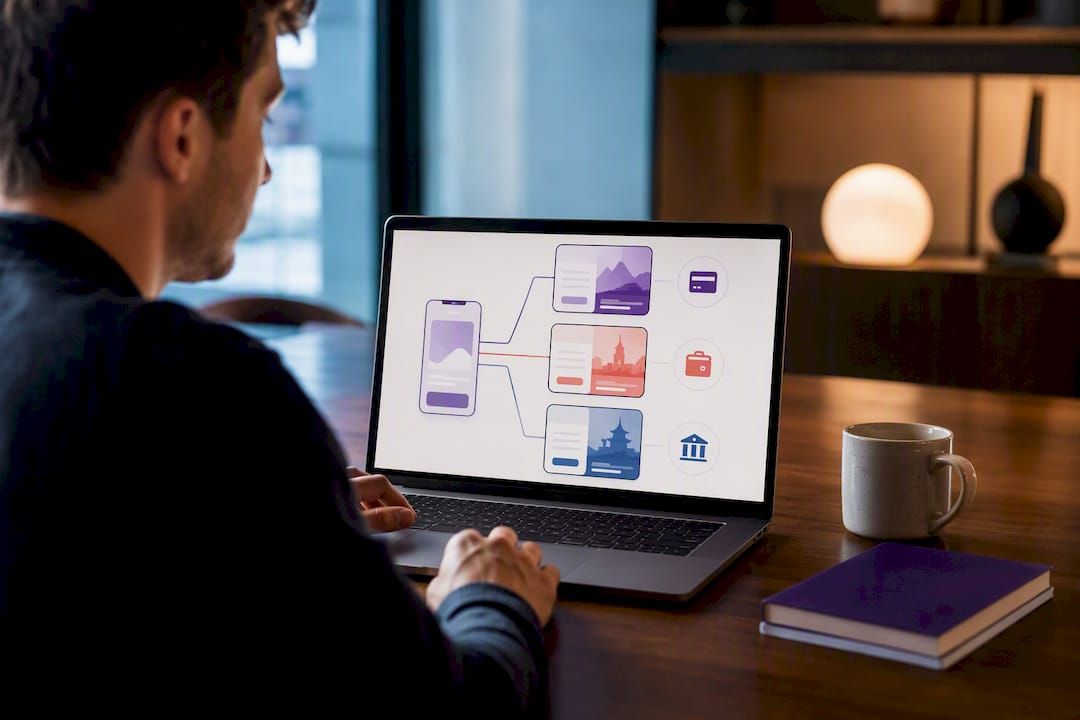
Color symbolism varies more than most product teams expect. Red signals danger or a stop action in a lot of Western UI conventions, but reads as luck and celebration in Chinese design contexts. White is associated with purity in many Western markets and with mourning in parts of East Asia. None of this means overhauling your brand palette for every locale, but it does mean checking whether a specific color choice in a warning state, a call-to-action button, or an onboarding flow sends an unintended signal somewhere you’re launching.
User experience patterns differ too, not just visuals. Form field order, name formats (single field versus first/last), address structures, and even preferred payment flow steps vary by region. A checkout flow tuned for US card payments can feel foreign in markets where mobile wallets or bank transfers dominate.
The practical move is to treat full localization, not MVL, as the stage where cultural adaptation gets real budget. Bring in a native reviewer or local market consultant to review visuals and flows specifically, not just translated copy, before a full launch.
Compliance requirements shift by market in ways that can quietly break a localization plan if legal review happens after the fact instead of during MVL planning.
Data privacy is the biggest one. Requirements like the EU’s GDPR or region-specific data residency rules can dictate where user data is stored and how consent is collected, which sometimes means changes to onboarding flows or backend architecture, not just translated privacy text. Build this check into your market-selection criteria from the earlier prioritization section, not as a post-launch surprise.
Accessibility standards vary by jurisdiction too, and some markets have legal accessibility requirements tied to public-facing digital products. Screen reader support, contrast ratios, and text scaling need testing in the target language specifically, since translated strings can run longer and break layouts that passed accessibility checks in English.
Age ratings and content restrictions differ by store and by country within the same store. Content that’s fine in one market may require an age-gate or a different rating classification elsewhere, which affects both your store listing and in-app content flags.
Payment and consumer protection rules also vary, particularly around subscription disclosures, refund policies, and how pricing must be displayed. Legal text isn’t just something to translate; it’s something to verify against local requirements before that translation happens.
Loop in legal review during the operational-criteria step of market selection, not after MVL ships. It’s far cheaper to catch a compliance gap before a build than after a market has already gone live.
Localization budgets swing wildly based on one decision: MVL versus full localization, multiplied by how many markets you’re targeting at once.
The main cost drivers, roughly in order of impact:
Translation volume and method. Machine translation with light post-editing is more cost-effective than professional human translation, allowing human efforts to focus on high-impact strings to maintain quality without incurring premium costs for less critical text.
Reviewer and QA time. Native linguistic reviewers and functional QA on real devices are recurring costs, not one-time ones, if you’re running continuous localization. Budget this as an ongoing line item tied to release cadence, not a single project fee.
Engineering time for i18n. This is a one-time cost per platform that pays for itself immediately. Apps that skip it pay repeatedly through rework every time a new market gets added.
TMS licensing. Most translation management platforms charge by word volume or seat count, and the cost scales with how many languages and how much content you’re managing simultaneously.
Translation memory reuse is the biggest lever for controlling cost over time. Once a string has been translated and stored, every future project reuses it for free instead of paying to retranslate “Settings” or “Cancel” for the fiftieth locale.
The MVL approach exists partly as a budget control mechanism: it caps spend to a defined set of high-priority strings and assets in one market, lets you measure actual return, and only unlocks full localization budget once a pilot proves the market is worth it.
The first version of any localization is a hypothesis, not a finished product. Real usage in a new market will surface problems no amount of pre-launch review catches.
Support tickets are the richest feedback source most teams underuse. A spike in tickets about a specific flow, in a specific language, points directly at either a translation quality issue or a genuine functional bug tied to that locale. Route ticket tagging by language and topic from day one of a pilot so this signal is visible without manual digging.
App store reviews written in the local language are a second channel, and they carry information that survey data misses because users write them unprompted, in their own words, about whatever frustrated or delighted them. Sentiment analysis on localized reviews, tracked against your non-localized baseline reviews, tells you whether the localized experience is landing.
In-app feedback prompts, if you have them, should be localized too and ideally ask a locale-specific question rather than a generic one. “Was checkout easy?” surfaces different answers in a market with unfamiliar payment methods than in your home market.
Feed all of this back into your TMS glossary and reviewer playbook, not just into a backlog. A recurring translation complaint should update the approved terminology list immediately, so the fix propagates to every future string rather than getting patched once and forgotten. Treat each pilot market’s feedback loop as the input for the next market’s MVL scope, since the mistakes rarely repeat, but the process improvements always do.
The strategy that works is unglamorous: internationalize before you translate, pilot one market with MVL before you commit to five, and build continuous localization into your CI pipeline so it stops being a launch-week fire drill. Most teams get this backward, chasing full localization in three markets simultaneously before their codebase can even support locale-aware plurals.
For a 90-day plan with clear owners: Weeks 1 to 2, product runs the signal audit. Weeks 3 to 6, engineering ships i18n readiness and pseudolocalization in CI while a localization lead builds the reviewer glossary. Weeks 7 to 12, everyone watches the retention and store-conversion dashboard and decides whether to scale. Success at 90 days isn’t five new languages. It’s one market with a retention curve that beats baseline and a process that made the second market cheaper than the first.
— Jorge Del Carpio
Most teams either overbuild localization before they’ve validated a single market, or bolt on translation so late that engineering ends up retrofitting string externalization under launch pressure. Kreante starts from the opposite end: an outcome first, then the smallest system that gets you there.
A typical engagement runs the same sequence covered throughout this guide. Kreante audits your current i18n readiness and analytics for market signals, builds a prioritized roadmap ordered by expected return, then prototypes an MVL build in weeks rather than months using senior engineers and low-code/AI tooling where it speeds delivery without cutting corners. From there, the full build gets CI/CD and TMS integration wired in, LQA support built into the release process, and post-launch monitoring so a locale’s performance shows up on a dashboard instead of a guess. The SmartCab case study shows this rapid-prototyping approach in practice, and you own the resulting code outright either way.
If your team needs a clear-eyed audit of where localization actually pays off before committing budget to five markets at once, start with Kreante’s AI consulting service to get a roadmap with a number attached to it, not just a recommendation.
A localization strategy is the sequenced plan for adapting a product, its store presence, and its operations for specific markets. The strongest approach combines internationalization first, minimum viable localization in signal-driven markets, and continuous localization backed by linguistic QA rather than a single pre-launch translation push.
App localization adapts an app’s strings, visuals, formats, payments, legal text, and store metadata for a specific locale, going well beyond translating words. It works by first internationalizing the codebase (externalized strings, locale-aware formatting), then routing content through a translation management system for machine or human translation, followed by linguistic and functional QA before release.
AI handles a meaningful share of routine translation well, and platforms like Google Play Console now offer automatic machine translation, including Gemini-powered models, with a preview-and-edit step before publishing, according to Google’s own documentation. High-impact copy like onboarding, paywalls, and push notifications still benefits from human post-editing to protect brand voice and conversion.
Rather than ranking specific vendors, the more useful question is what capability a team actually needs: TMS platforms for workflow automation, professional translation agencies for high-impact linguistic work, or a development partner like Kreante that can build the i18n foundation, CI integration, and MVL prototype the whole strategy depends on.
An MVL pilot for one market typically takes six to eight weeks once i18n is in place, covering store listing, core strings, and critical flows. Full localization with cultural adaptation and continuous localization infrastructure is an ongoing process rather than a fixed-length project, since it runs alongside every future release.
Go further
Don't let your tech watch stop here. Explore our other resources to master your technology stack.
ToolsPrototype in weeks with a modular monolith, trace key flows, and extract services only when a module must scale or need stricter isolation. Kreante...
 Tools
ToolsGet a practical implementation plan for analytics for SaaS: a 90 day roadmap, a 5 to 7 metric scorecard, and clear criteria to decide whether to build or...
 Tools
ToolsStage based auth for startups: start passwordless with an MFA fallback, use a compact rollout checklist, and learn from Kreante's 265 builds.