
 Tools
ToolsBubble vs Webflow: Key differences of the two biggest NoCode platforms
NoCode platforms are a growing trend in web development, enabling users to create web apps without coding
KreanteJanuary 15, 2025Read the article
Discover Bubble, a leading no-code platform for app development. Learn its features, benefits, and how to get started. Read the full guide now!

Published on January 16, 2025
By Jorge Del Carpio · 20 minute read
Bubble.io is a no-code app development platform that enables anyone to build web applications visually, without writing code. It’s perfect for non-technical users who want to bring their ideas to life quickly and efficiently by creating apps in a user-friendly way. This article will explain what is bubble, its main features, and how it stacks up against other no-code tools.

Bubble.io is a no-code app development framework that allows users to design, develop, host, and scale applications without writing any code. This bold claim positions Bubble.io as a revolutionary tool in the bubble apps space, especially for those without a technical background. But does it really live up to the hype? No code apps.
One of the most compelling aspects of Bubble.io is its accessibility. Designed to help non-engineers and users without coding skills build their applications, it democratizes web development by making it possible for anyone to create software. This is a significant promise, especially for small businesses and startups that may not have the resources to hire a full development team.
Moreover, Bubble.io can handle both front-end and back-end logic, providing a more comprehensive solution compared to other no-code tools that focus primarily on front-end design. This means you can build everything from simple landing pages to complex, data-driven applications using a single platform. It’s no wonder that Bubble.io was named one of Fast Company’s Most Innovative Companies in 2021.
The platform’s popularity is evident, with over 4.69 million applications built using Bubble.io to date. This staggering number speaks volumes about its effectiveness and the trust it has garnered within the development community. However, as with any tool that makes such grand promises, it’s essential to scrutinize these claims and see how they hold up in real-world scenarios.
Stay tuned as we delve deeper into Bubble.io’s unique selling points, its target audience, and how it stacks up against the competition. We’ll put these claims to the test and provide you with an unbiased, comprehensive review.
Bubble.io is renowned for its balance between power and ease of use, making it accessible even to non-technical users. This unique blend ensures that both beginners and experienced developers can leverage the platform to create sophisticated applications. But what exactly sets Bubble.io apart from other no-code platforms?
One of the standout features of Bubble.io is its versatility and customizability. Users can engage with a wide array of client requests without feeling limited by the platform’s capabilities. This flexibility is a significant advantage for freelancers and agencies that need to cater to diverse project requirements.
Another key selling point is Bubble.io’s ability to manage both front-end and back-end logic seamlessly. This comprehensive approach eliminates the need for multiple tools, streamlining the development process. Whether you’re building a simple landing page or a complex application, Bubble.io provides the tools you need to bring your vision to life.
Handling complex workflows efficiently is another area where Bubble.io shines. The platform allows users to create intricate workflows without the need for traditional coding, making it an excellent choice for projects that require detailed processes and automation. This is particularly beneficial for those tackling a complex project, as Bubble.io can guide users from start to finish, minimizing the time investment required.
Finally, Bubble.io’s capability to create both prototypes and fully-fledged products is a testament to its robustness as a no-code platform. Whether you’re in the initial stages of developing an idea or ready to launch a polished product, Bubble.io offers the tools and features to support your journey.
As we continue, we’ll explore who stands to benefit most from these features and how Bubble.io caters to its diverse audience.
Bubble.io is a powerful no-code platform that offers a wide range of features to help users build complex web applications without writing code. Some of the key features of Bubble.io include:
Bubble.io works by providing a visual interface that allows users to build web applications without writing code. Here’s a step-by-step overview of how Bubble.io works:
Bubble.io primarily appeals to non-technical entrepreneurs, small businesses, and startups looking to create web applications without coding. This accessibility is a game-changer for those who have innovative ideas but lack the technical skills to bring them to life. But who exactly is using Bubble.io, and how are they benefiting from it?
For non-technical entrepreneurs, Bubble.io offers a way to turn their ideas into fully functional web applications without the need for a technical co-founder or a development team. This can significantly reduce startup costs and speed up the time to market, making it easier to test and iterate on new ideas.
Small businesses also find Bubble.io incredibly useful for rapid application development with less initial investment. Whether it’s creating an internal tool to streamline operations or developing a customer-facing app, Bubble.io provides the flexibility to iterate quickly and adapt to changing business needs.
Startups benefit from the platform’s flexibility, allowing them to pivot and iterate on their product ideas quickly. With over 4.69 million applications developed on Bubble.io, these businesses have collectively raised over $15 billion, demonstrating the platform’s effectiveness in supporting innovation and growth.
Moreover, Bubble.io is not just for novices. Experienced developers also use the platform to quickly prototype and test new features, saving valuable time and resources. This versatility makes Bubble.io a valuable tool for a wide range of users, from beginners to seasoned professionals.
Next, we’ll dive into the practical aspects of getting started with Bubble.io and what you need to know to begin your development journey.
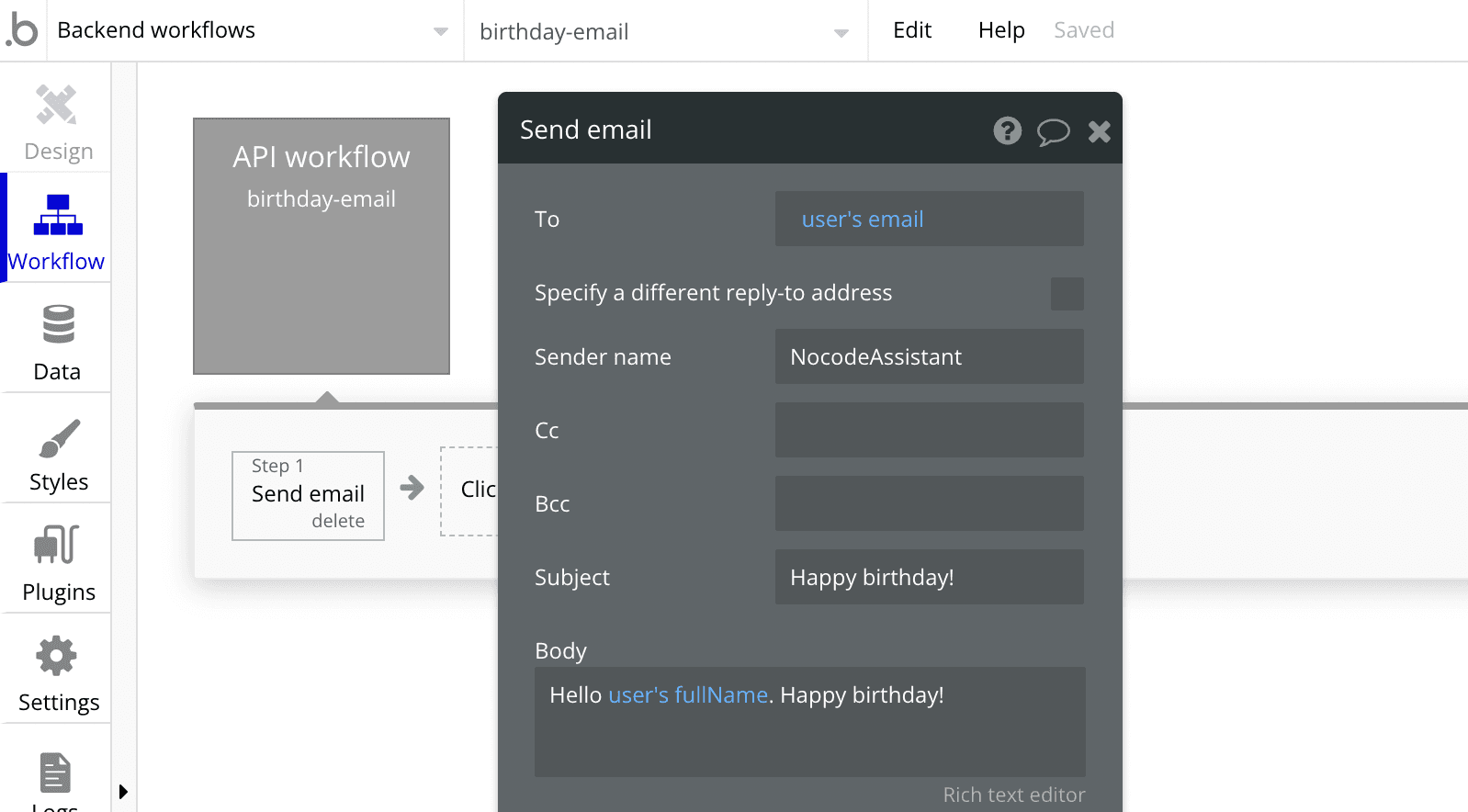
Getting started with Bubble.io is a straightforward process, designed to be as user-friendly as possible. The first step is to sign up for an account and choose a suitable plan that fits your needs. Whether you’re just experimenting or ready to launch a full-scale project, Bubble.io offers various plans to accommodate different requirements.
One of the most valuable resources for beginners is the extensive range of tutorials provided by Bubble.io. These tutorials cater to different skill levels, helping users learn the platform effectively. From basic app creation to more advanced features, these tutorials are designed to guide you through each step of the process.
Creating your first app is made easy with Bubble.io’s visual interface and drag-and-drop functionality. This approach significantly reduces development time compared to traditional methods, allowing you to create apps focused on design and functionality without getting bogged down by a no code app builder.
Regular community updates provide users with important information about new features and improvements. This helps maintain engagement and ensures that users are always up-to-date with the latest advancements. Additionally, the active community forums (https://forum.bubble.io/) are a great place to ask questions and share knowledge with other Bubble users.
Familiarizing yourself with the necessary tools and resources is key to a successful start with Bubble.io. In the next section, we’ll explore these essentials in detail.
To make the most out of Bubble.io, it’s crucial to leverage the various tools and resources available. First and foremost, the platform offers a variety of pre-built apps and templates from the Bubble community. These can serve as a great starting point, allowing you to customize and build upon existing solutions.
Before:
Learning resources for Bubble.io are abundant and diverse. Comprehensive documentation, tutorials, community forums, online courses, and webinars are all available to help you navigate the platform efficiently. These resources cater to different learning styles, ensuring that everyone can find the support they need.
After:
Learning resources for Bubble.io include:
These resources cater to different learning styles, ensuring that everyone can find the support they need.
One of the standout features of Bubble.io is its support for collaborative development. Multiple users can work on projects simultaneously, with customizable permissions to manage access and roles. This is particularly beneficial for teams working on complex projects, as it facilitates better coordination and productivity.
While Bubble.io is primarily a no-code platform, some technical expertise can be beneficial, especially when dealing with advanced features. For instance, integrating third-party services or customizing functionality might require a basic understanding of APIs and other tools.
As you dive deeper into using Bubble.io, it’s essential to consider the user interface and overall experience. The next section will discuss the design, aesthetics, and usability of the platform in detail.
Bubble.io’s user interface is one of its most appealing features, designed to make app development as intuitive as possible. The drag-and-drop interface simplifies the design of user interfaces, databases, and workflows, allowing users to visually assemble their applications. For those new to app development, this visual approach reduces the learning curve significantly.
Dynamic customization of the drag-and-drop experience is possible, allowing users to make style changes during interactions. This means you can see how your app will look and behave in real-time, making the design process more interactive and engaging. Additionally, users can test their configurations live in Bubble’s Preview mode before deploying their applications.
However, creating sophisticated user interfaces can sometimes be challenging on Bubble.io. While the platform offers a range of customization options, it may not provide all the advanced features required for intricate designs. This can be a limitation for developers looking to create highly customized user interfaces.
The drag-and-drop interface is particularly beneficial for applications like task boards, where user engagement is essential. It improves user interaction by allowing elements to be repositioned easily within the application. Moreover, Bubble supports plugins to enhance the drag-and-drop functionality, providing users with a customizable interface.
Bubble.io’s drag-and-drop editor is powerful enough to design production-grade UI, making it a versatile tool for both simple and complex applications. Next, we will explore how Bubble.io can be customized and extended to meet specific needs.
One of the key strengths of Bubble.io is its customizability and extensibility. The platform allows users to integrate third-party services and APIs through its plugin marketplace, significantly expanding its functionality. This makes it possible to connect your Bubble app with various external services, enhancing its capabilities.
While Bubble.io is primarily a no-code platform, it does allow for some custom code to enhance applications. Users can extend Bubble’s functionality using JavaScript plugins, though the platform restricts custom coding to JavaScript. This provides a balance between no-code convenience and the flexibility to write code for more control and customization.
Integration capabilities are another strong point of Bubble.io. The platform facilitates easy integration with many third-party services through APIs, allowing for seamless data exchange and functionality enhancement. This is particularly useful for developers looking to create custom solutions that require external data or services.
However, it’s important to note that while Bubble.io allows for custom coding, it may not offer the same level of flexibility as traditional coding environments. This can be a limitation for developers who need to implement highly specialized features or complex logic.
Delving deeper into Bubble.io’s built-in features and plugins reveals how these capabilities combine to create a robust development platform.
Bubble.io offers a comprehensive set of built-in features and plugins that simplify the app development process. One of the most notable features is its built-in database functionality, which simplifies data management during app development. Users can define data types, relationships, and constraints easily, making it a powerful tool for managing complex data structures.
The platform also integrates smoothly with popular analytics tools, allowing users to track app usage and customer interactions effectively. This is essential for understanding user behavior and making data-driven decisions to improve your application.
Automation tools are another key feature of Bubble.io, enhancing workflow management within applications. These tools allow users to automate repetitive tasks, improving efficiency and productivity. Whether it’s sending automated emails or updating databases, these automation tools can save valuable time.
Bubble offers over 6,500 plugins and integrations, allowing users to extend the platform’s capabilities significantly. These plugins cover a wide range of functionalities, from payment gateways to social media integrations, making it easier to add new features to your app without writing code.
Responsive design tools in Bubble.io ensure that applications are optimized across various devices, providing a consistent user experience. The platform’s drag-and-drop editor allows for rapid design of user interfaces suitable for production-level applications.
Next, we will evaluate Bubble.io’s performance in real-world application development scenarios.

When it comes to real-world application development, Bubble.io proves to be a robust platform capable of handling a variety of scenarios. One of its standout features is the ability to accommodate scaling without technical adjustments, allowing apps to grow from prototypes to enterprise-level solutions seamlessly. This means that as your user base grows, your Bubble app can handle the increased load without requiring significant changes.
Bubble.io also excels in managing sudden increases in traffic by automatically adjusting resources as needed. This is particularly useful for applications that experience variable traffic patterns, ensuring a smooth user experience even during peak times.
The platform employs caching and content delivery networks (CDNs) to enhance web apps performance. These technologies help reduce load times and improve the overall responsiveness of your app, providing a better user experience.
Bubble.io’s reliance on Amazon Web Services (AWS) infrastructure contributes to its scalability and reliability. This robust infrastructure ensures that your application can handle both small and medium-sized projects efficiently.
Users can build a wide range of applications with Bubble.io, from simple landing pages to complex data-driven web applications, social networks, marketplace platforms, and CRM systems. This versatility makes Bubble.io a valuable tool for developers working on diverse projects.
Next, we’ll explore how Bubble.io handles complex logic and workflows.
Handling complex logic is one of the areas where Bubble.io truly shines. The platform’s workflow system allows the creation of complex application logic through a series of actions triggered by specific events. This makes it possible to build sophisticated applications without writing code, using a visual approach to define workflows and processes.
Implementing asynchronous workflows in Bubble.io can enhance application responsiveness by offloading heavy tasks. This is particularly useful for applications that require real-time data processing or need to handle multiple tasks simultaneously.
Users can create complex logical expressions and conditional logic within Bubble, akin to traditional programming capabilities. This allows for dynamic interactions and advanced features, making Bubble.io a powerful visual programming language for building complex applications.
For creating dynamic graphics or complex game mechanics, integrating JavaScript with Bubble can enhance the application’s capabilities. This provides additional flexibility for developers who need to implement specialized features that go beyond the platform’s native capabilities.
Bubble.io also offers a version control feature that enables safe testing and deployment of changes, fostering application stability. This ensures that you can make updates and improvements to your application without risking its overall functionality.
Next, we will evaluate the security features and compliance measures of Bubble.io.

Security and compliance are critical considerations for any app development platform, and Bubble.io does not disappoint in this regard. The platform employs a robust user authentication system that includes password encryption, email verification, two-factor authentication, and single sign-on capabilities. These features ensure that user data is protected and access is controlled effectively.
Bubble.io offers granular privacy controls that allow users to set access permissions for different data items using a user-friendly language. This provides flexibility in managing data access and ensures that sensitive information is protected.
The platform integrates advanced DDoS protection through a partnership with Cloudflare to mitigate potential attacks. This helps protect your application from malicious traffic and ensures its availability even during large-scale attacks.
Data is protected during transmission with TLS and at rest through AES-256 encryption. These encryption standards ensure that your data is secure both in transit and when stored on the server.
Bubble.io is subjected to annual penetration testing following the OWASP Web Security Testing Guide, ensuring that the platform adheres to industry best practices for security. Additionally, its infrastructure on AWS is compliant with 143 security standards and certifications, providing a secure foundation for your applications.
Finally, Bubble has acquired the NoCode security tool Flusk in October 2024.
Next, we’ll explore the support and community resources available for Bubble.io users.
Bubble.io integrates with a wide range of third-party services and platforms, making it easy to connect your web application to other tools and services. Some of the integrations include:
By leveraging these integrations, Bubble.io users can enhance the functionality of their web applications and create more comprehensive and versatile solutions.
Bubble.io offers extensive support and community resources to help users navigate the platform effectively. One of the most valuable resources is the comprehensive user manual, designed like a guidebook that allows users to explore topics sequentially or selectively. This manual is a great starting point for anyone new to Bubble.io.
The platform also provides extensive documentation that covers various aspects of app development, from basic features to advanced functionalities. This documentation is essential for understanding how to use the platform’s tools and features effectively.
Additional learning resources are available, including video lessons, live coaching, and bootcamps. These resources cater to different learning styles and provide hands-on guidance for mastering Bubble.io.
The community forums on Bubble.io are a valuable resource for users to ask questions and share solutions. These forums are populated by experienced users who are willing to help newcomers, making it a supportive environment for learning and problem-solving.
Moreover, there is a selection of ready-made applications and templates developed by the Bubble community to streamline app creation. For those who need customized assistance, it is also possible to find expert developers through Bubble.io.
As we move toward our overall assessment, we’ll summarize the strengths and weaknesses of Bubble.io.
Overall, Bubble.io is a powerful no-code platform that allows users to create sophisticated web applications without writing code.
Its key features include:
This makes it an excellent choice for non-technical users and small businesses looking to develop low code custom applications quickly and cost-effectively.
However, one major drawback of Bubble.io is that users cannot export their code, leading to potential vendor lock-in and challenges in migrating to other platforms. This limitation can be a significant concern for developers who need the flexibility to move their applications to different environments.
Another limitation is its ability to create native mobile applications. Bubble.io relies on wrappers, which can hinder performance compared to native development. This makes it less suitable for projects that require high-performance native mobile applications.
Despite these drawbacks, Bubble.io offers a robust set of features and a supportive community, making it a valuable tool for a wide range of users. Its balance of power and ease of use, combined with its extensive customization and integration capabilities, makes it a strong contender in the no-code platform space.
We will compare Bubble.io’s pricing plans and the features they provide to assess its value for money.

Bubble.io offers four pricing tiers: Free, Starter, Growth, and Production plans. The free plan permits users to explore basic features. However, it does not offer app deployment or advanced functionalities. This is a great option for beginners who want to explore the platform without any financial commitment.
The Starter plan, recommended for simple applications, is priced at approximately $29/month, while the Growth plan includes enhanced security for $119/month. These plans provide more features and capabilities, making them suitable for small businesses and startups ready to launch their applications.
Bubble.io implements a usage-based pricing model, allowing for cost variability depending on the application’s workload. This flexibility can be beneficial for users with varying needs, as it allows them to pay for only what they use. Additionally, discounts are available for students and nonprofits, making the platform more accessible to a wider audience.
When compared to other no-code platforms, Bubble.io offers competitive pricing and a comprehensive set of features. While it may not be the cheapest option available, its balance of power, ease of use, and extensive customization capabilities make it a valuable investment.
In conclusion, we will explore some alternatives to Bubble.io and compare their features and pricing.
While Bubble.io is a powerful no-code platform, it’s essential to consider other options available in the market. One notable alternative is Softr, known for its user-friendly design and drag-and-drop interface, allowing users to create applications without coding. Softr’s pricing includes a free plan, with paid plans starting at $59/month.
Glide specializes in turning spreadsheets into mobile apps, making it ideal for users who want to create applications quickly using existing data. Glide allows for instant updates to the app whenever changes are made to the connected spreadsheet. Its pricing structure includes a free plan for individuals, with paid plans starting at $60/month.
Backendless is another strong contender, known for its real-time database capabilities and codeless logic builder. This platform enables users to implement complex functionalities visually, making it a flexible and powerful option. Backendless offers paid plans starting at $15/month, making it an affordable alternative.
Each of these alternatives has its strengths and weaknesses, and the best choice depends on your specific needs and goals. While Bubble.io offers a comprehensive set of features and robust customization capabilities, Softr, Glide, and Backendless provide unique advantages that may be more suitable for certain projects.
In the final section, we’ll summarize the key points discussed in this review and provide our concluding thoughts.
Bubble.io is a user-friendly platform that lets you build and launch web applications without needing to write any code. It's perfect for anyone looking to bring their app ideas to life quickly and easily.
Absolutely, you can learn Bubble.io without knowing how to code! Just be prepared for a bit of a learning curve, but with practice, you'll get the hang of it.
You can create a wide variety of applications with Bubble.io, like custom marketplaces, social networks, booking apps, and CRMs. It's a versatile platform perfect for bringing your ideas to life!
Bubble has raised over $100 million in funding to date.
Absolutely, Bubble apps are secure since they're hosted on Amazon Web Services (AWS), ensuring a robust and compliant infrastructure. You can feel confident knowing that they take security seriously.
Go further
Don't let your tech watch stop here. Explore our other resources to master your technology stack.
ToolsNoCode platforms are a growing trend in web development, enabling users to create web apps without coding
 Tools
ToolsFor a few years, NoCode has occupied a prominent place in the field of digital creation. Indeed, individuals as well as companies are more and more seduced by the NoCode development solution, given the many advantages that are associated with it. If developing in NoCode is an interesting alternative on many levels, what is sure is that it will be effective over a determined period. The question is: Is NoCode scalable?
 Tools
ToolsNoCode is the best technique for fast web application or website development. These 6 advantages will persuade you to use NoCode.