Landing Page vs Website: Choosing the Right Option for Your Business
Confused about whether to choose a landing page or a full website for your business? Discover the pros and cons to make an informed decision. Read more!
Fundamentals
KreanteDecember 4, 20259 months ago
Published on March 23, 2025 Written by Jaren Hidalgo · 10 minute read
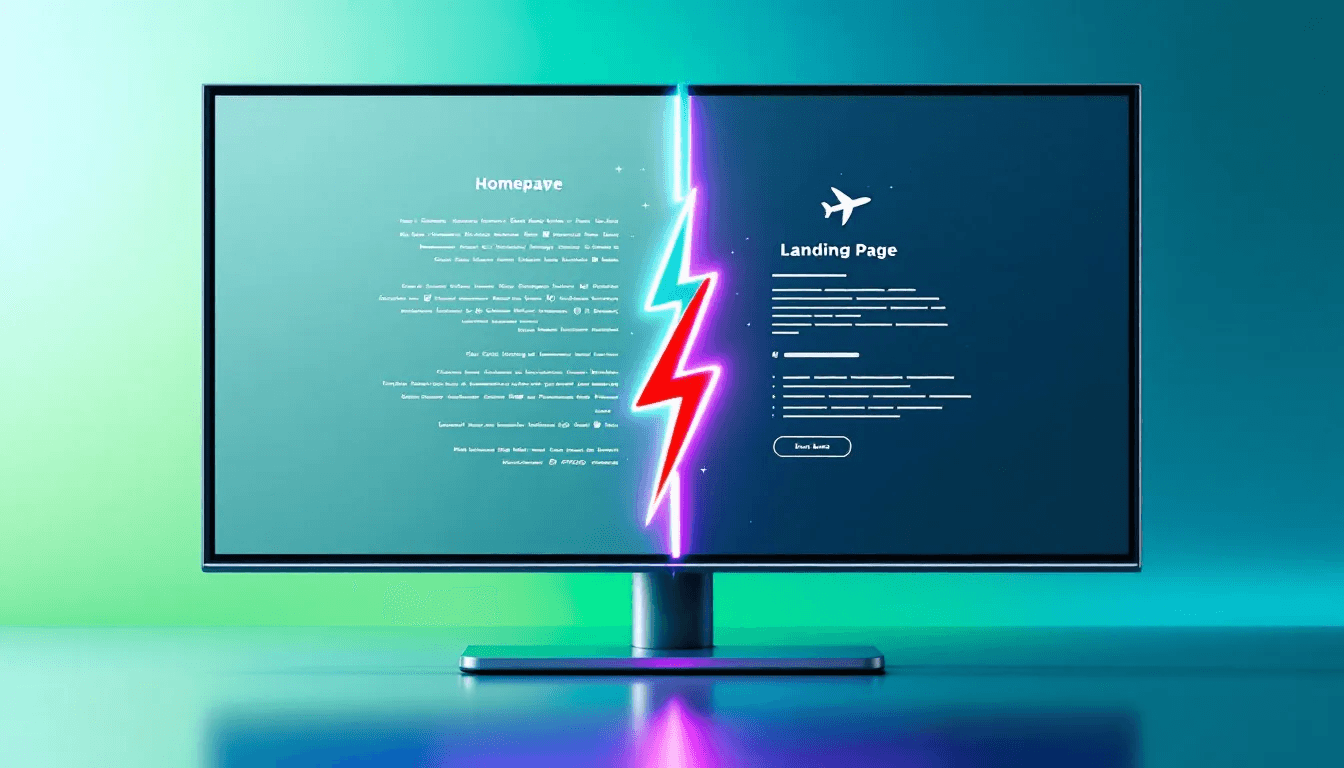
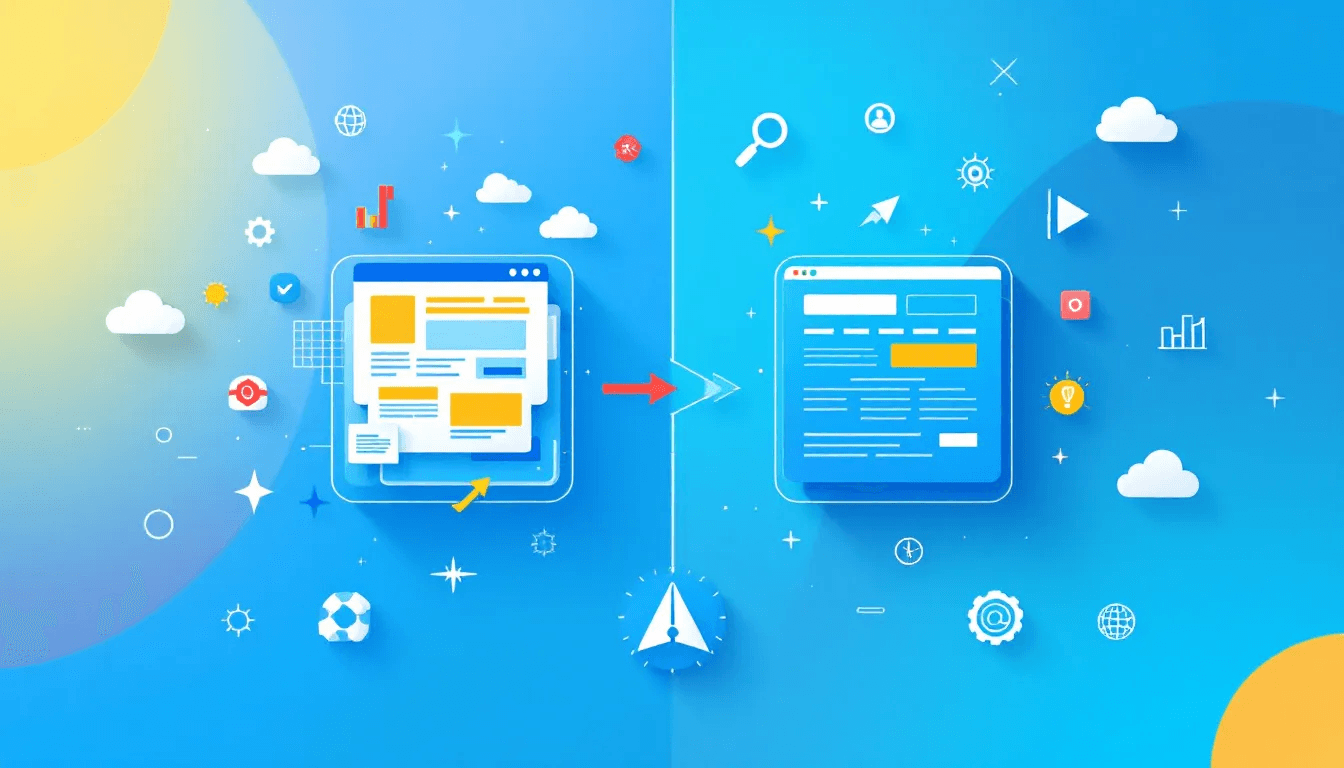
Not sure if you need a landing page vs. website? You’re in the right place. Landing pages are perfect for focused marketing campaigns like capturing leads or promoting specific products. Unlike a traditional website, which consists of multiple pages serving various purposes, one landing page is singularly focused on encouraging a specific action from visitors, effectively minimizing distractions and enhancing user engagement. Websites, on the other hand, provide a detailed overview of your business. This article will clear up the differences between landing page vs. website and help you decide which is best for your needs.
Overview
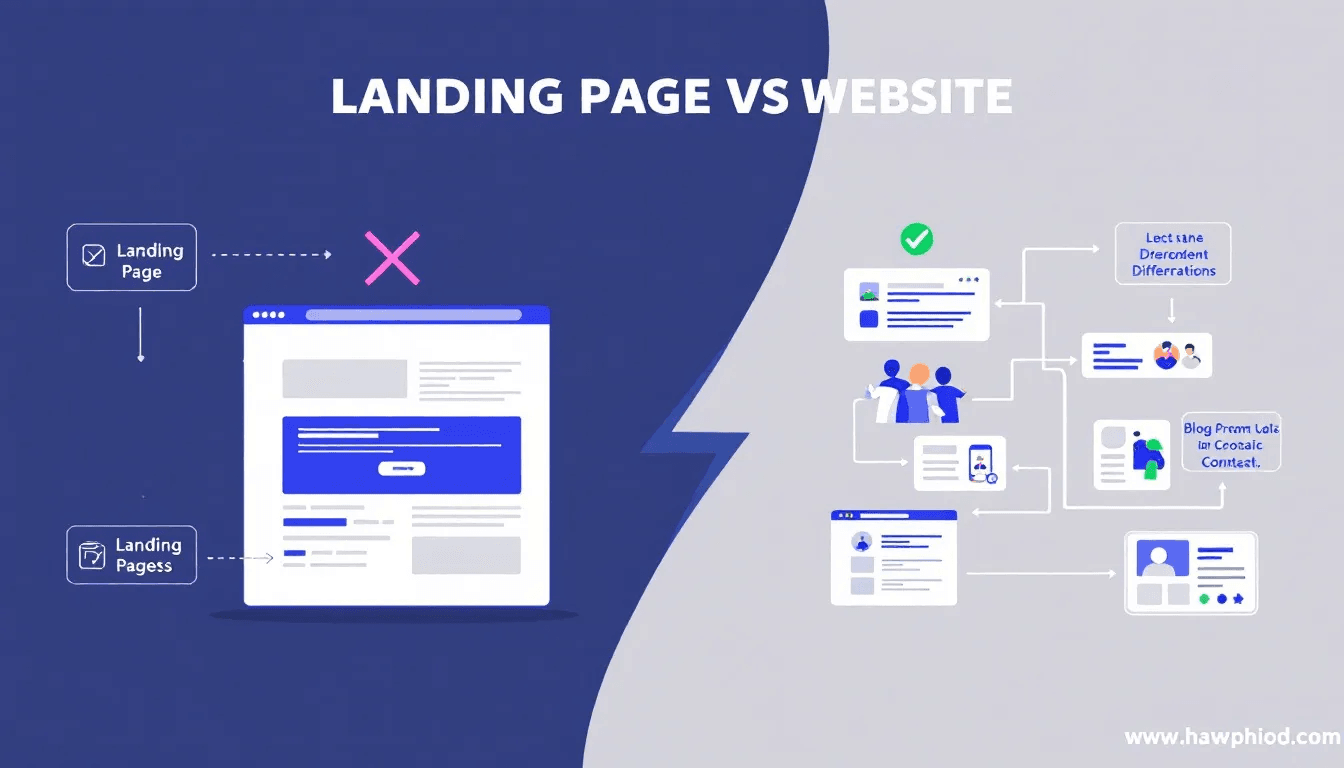
In the digital landscape, a landing page and a website serve distinct purposes. A landing page is a single page designed to capture leads and convert visitors by focusing on a specific objective. On the other hand, a website is a collection of multiple pages that provide comprehensive information about a business, allowing visitors to explore different sections such as product details, service descriptions, and company history.
NoCode tools have revolutionized web development, enabling businesses to create both landing pages and websites quickly and efficiently. These tools allow for the creation of visually appealing, high-converting landing pages and comprehensive websites without the need for complex coding.
Understanding the key differences and how to leverage NoCode tools can help you create an effective online presence that meets your business needs.
Understanding the Basics: Landing Page vs Website
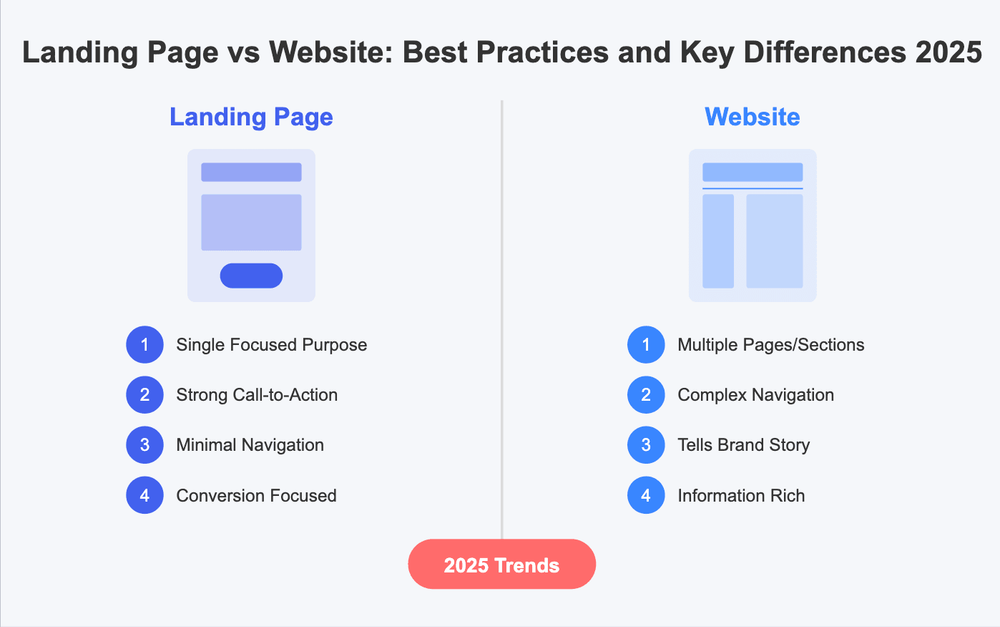
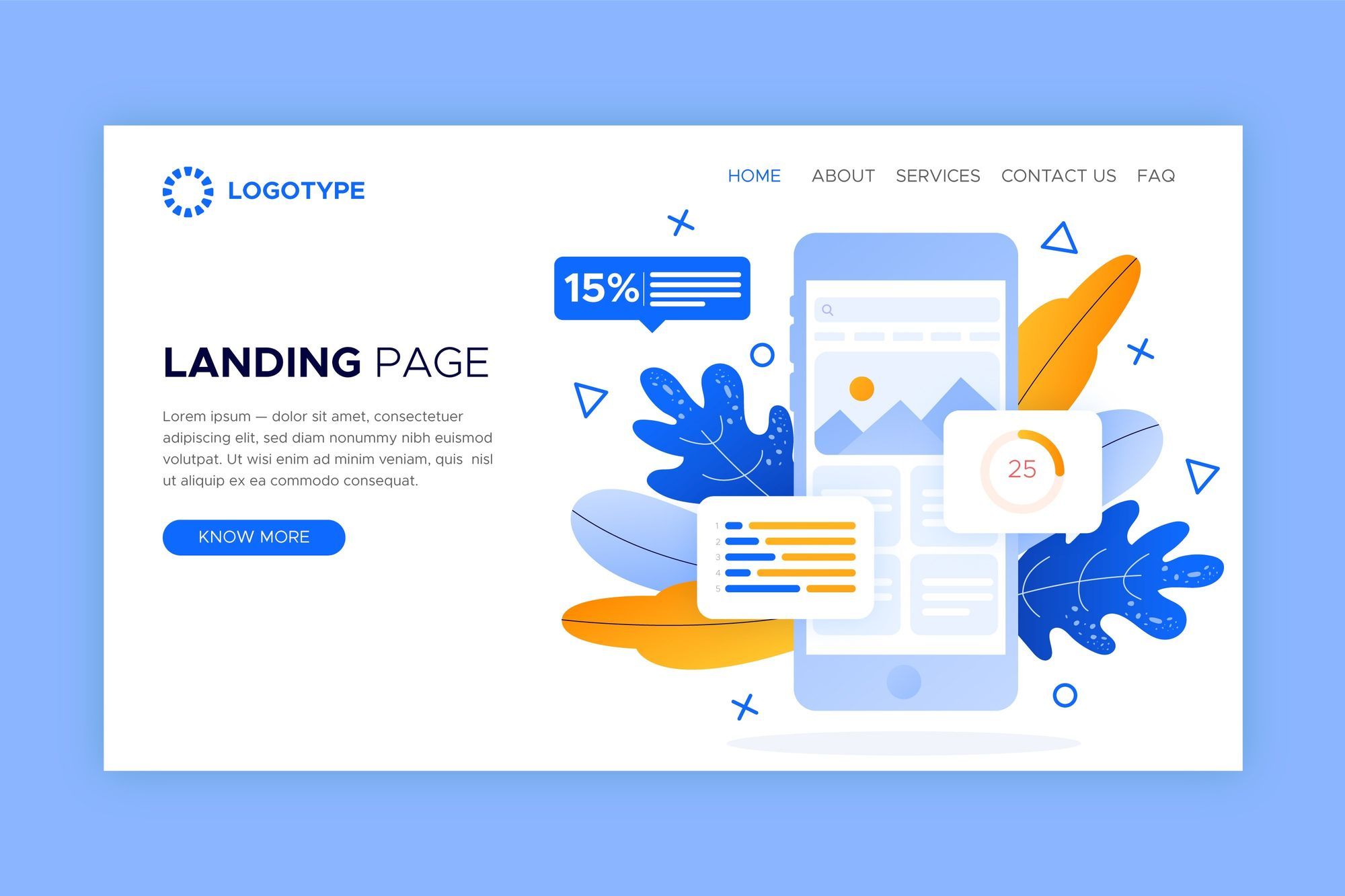
A landing page is an action-oriented standalone web page created for a specific marketing campaign. Unlike a traditional website, which consists of multiple pages serving various purposes, one landing page is singularly focused on encouraging a specific action from visitors, effectively minimizing distractions and enhancing user engagement. Its primary purpose is to capture the visitor’s attention and prompt them to act, such as signing up for a newsletter or making a purchase. Landing pages are designed to be concise and direct, with a clear value proposition and a compelling call to action (CTA).
In contrast, a website is a collection of web pages and sections that provide comprehensive information about a single web page and its services.
Websites serve as a digital springboard for exploration, offering detailed content such as:
product descriptions
company history
blog articles
and more
The primary purpose of a website is to establish an online presence and build brand credibility.
Key Differences Between Landing Pages and Websites
While both landing pages and websites play crucial roles in digital marketing, understanding their key differences is essential for choosing the right solution for your landing pages websites.
This section will delve into the purpose and goals, structure and navigation, and content and messaging of each to provide a comprehensive guide on when to use either a landing page or a website.
Purpose and Goals
A landing page is specifically crafted to convert visitors into leads by focusing on a single marketing objective. Unlike a traditional website, which consists of multiple pages serving various purposes, one landing page is singularly focused on encouraging a specific action from visitors, effectively minimizing distractions and enhancing user engagement. The primary goal is to drive visitors toward a specific action, such as signing up for a service or making a purchase. Landing pages are tailored to achieve specific conversion objectives and minimize distractions to encourage conversions, often through clear and compelling calls to action (CTAs).
In contrast, a website serves as an interconnected collection of pages that represent a business online, offering diverse content and information. Websites are designed to serve broader informational purposes, providing detailed descriptions of services, company history, and more.
A landing page and a website can coexist in two main ways:
Convert the Landing Page into a Website Using the Same URL: Start with a landing page, then expand it into a full website by adding more pages while keeping the same URL. This approach leverages existing traffic and SEO positioning.
Maintain Separate URLs for the Landing Page and Website: Create a new domain or subdomain for the website, while the landing page remains independent with its own URL. This is beneficial if the landing page serves a specific purpose, like capturing leads from a campaign.
Which option is best depends on your goals. If the landing page is temporary, it's ideal to evolve it into a website. If it serves a specific ongoing purpose, keeping it separate is better. Not all businesses need to evolve a landing page into a website; some can operate effectively with just landing pages if their main goal is lead generation or selling a single product/service. Ultimately, whether a landing page evolves into a website depends on the business strategy.
Structure and Navigation
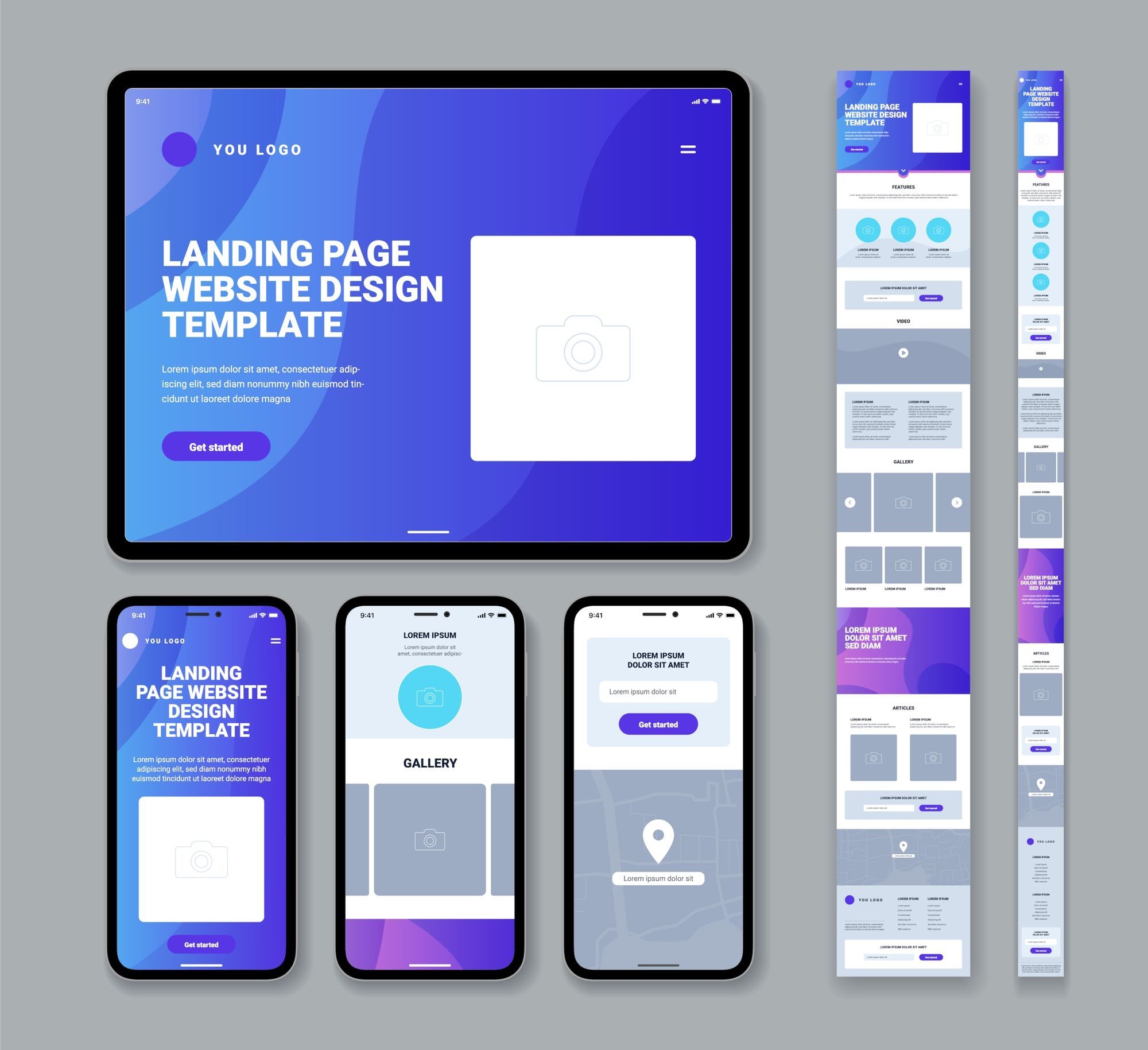
Landing pages often have little to no navigation to keep visitors focused on the desired action. The streamlined design highlights the value proposition and CTA, making it easier for visitors to take the intended action. Typically, landing pages do not include a navigation menu or only link to different sections of the same page.
On the other hand, a website provides a broader platform for detailed information about products or services, helping establish brand trust. Websites feature a variety of pages and links to facilitate content exploration, often including a simple top menu with clear labels and dropdown access to resources.
Both landing pages and websites require careful navigation design to enhance user experience, but their structures serve different purposes.
Content and Messaging
The content of a landing page is designed to be direct and action-oriented, contrasting with the more comprehensive content found on websites. Landing pages typically include a brief description and a CTA button, conveying a clear and compelling message about the product’s benefits. Key features of a landing page include a single focus, clear CTAs, minimal navigation, engaging content, and optimized forms.
In contrast, a website typically offers:
Detailed descriptions of services
Company history
Industry insights
Diverse content such as blogs and product pages
Websites are designed to provide comprehensive information and support long-term customer engagement, encouraging visitors and making them ideal for building brand authority and trust.
When to Use a Landing Page
Landing pages are primarily used to generate leads or sales, promote products or services, and encourage specific actions. They are especially useful in digital marketing campaigns. They also perform well in pay-per-click advertising and lead generation initiatives. For example, if you want to drive sign-ups for an event or promote a special offer, a dedicated landing page can help you achieve higher conversion rates.
Businesses should utilize landing pages when they need to drive specific actions or conversions, such as lead generation or product promotions. These pages are ideal for focused campaigns where the goal is to capture leads quickly and efficiently. To create landing pages, high-converting landing pages help businesses achieve their marketing objectives more effectively.
Benefits of Using Landing Pages
Landing pages offer several benefits for businesses and marketers. Here are some of the most significant advantages of using landing pages:
Improved Conversion Rates: Landing pages are designed to convert visitors into customers by focusing on a single goal and eliminating distractions. This streamlined approach increases the chances of visitors taking the desired action, leading to higher conversion rates.
Targeted Marketing: Landing pages allow businesses to target specific audiences with tailored messages and offers. By addressing the unique needs and interests of different segments, landing pages can lead to higher engagement rates and more effective marketing campaigns.
Measurable Results: One of the key advantages of landing pages is their ability to provide measurable results. Businesses can easily track the performance of landing pages, analyze data, and refine their marketing strategies to improve return on investment.
Cost-Effective: Creating landing pages is a cost-effective way to promote products or services. They can be developed quickly and easily using NoCode tools, without the need for extensive development or design resources.
Flexibility: Landing pages are versatile and can be used for various purposes, from promoting products or services to capturing leads or encouraging visitors to take a specific action. They can be easily adapted to suit different marketing strategies and goals.
How to Create Landing Pages that Make an Impact
Creating effective landing pages requires a combination of design, copywriting, and optimization techniques. Here are some tips for creating landing pages that make an impact:
Clear and Concise Messaging: Ensure your landing page has a clear and concise message that communicates the value proposition and encourages visitors to take action. Avoid clutter and focus on the key benefits.
Visually Appealing Design: A visually appealing design grabs the attention of visitors and draws them in. Use high-quality images, videos, and graphics to create an engaging and attractive landing page.
Optimized for Conversion: Optimize your landing page for conversion by including a clear call-to-action (CTA) and minimizing distractions. Use social proof, such as customer testimonials, and create a sense of urgency to encourage visitors to act.
Mobile-Friendly: Ensure your landing page is mobile-friendly with a responsive design that adapts to different screen sizes and devices. This is crucial as more users access web pages from mobile devices.
Testing and Optimization: Regularly test and optimize your landing page to improve its performance. Use A/B testing to compare different versions and analyze data to refine your approach.
The Role of SEO in Landing Pages
Search engine optimization (SEO) plays a crucial role in the success of landing pages. Here are some ways that SEO can impact landing pages:
Keyword Research: Conduct thorough keyword research to identify relevant keywords and phrases. By optimizing your landing pages for these keywords, you can attract more targeted traffic from search engines.
On-Page Optimization: Implement on-page optimization techniques, such as optimizing meta tags, header tags, and content structure. This helps improve the visibility of your landing pages in search engine results.
Content Quality: High-quality content is essential for landing pages. Ensure your content is informative, engaging, and relevant to your target audience. This can help improve your ranking in search engine results and attract more targeted traffic.
Link Building: Build high-quality links from other websites to improve the authority and ranking of your landing pages. This can be achieved through guest blogging, partnerships, and other link-building strategies.
Technical Optimization: Optimize the technical aspects of your landing pages, such as page speed and mobile responsiveness. This enhances the user experience and can positively impact your search engine rankings.
Lead Magnets and Landing Pages
Lead magnets are offers or incentives used to encourage visitors to take a specific action, such as providing their contact information. Landing pages can be used to promote lead magnets and capture leads. Here are some ways that lead magnets and landing pages can be used together:
Offering a Free Resource: Use landing pages to offer a free resource, such as an e-book, whitepaper, or webinar, in exchange for contact information. This can attract visitors and encourage them to provide their details.
Promoting a Discount: Create landing pages to promote a discount or special offer. Visitors can provide their contact information to receive the discount, making it an effective way to capture leads.
Encouraging a Free Trial: Use landing pages to encourage visitors to sign up for a free trial of your product or service. This can help you capture leads and give potential customers a chance to experience your offering.
Capturing Contact Information: Design landing pages to capture contact information, such as email addresses and phone numbers, in exchange for a lead magnet. This can help you build a database of potential customers for future marketing efforts.
Testing and Optimization
Testing and optimization are essential for improving the performance of landing pages. Here are some ways that landing pages can be tested and optimized:
A/B Testing: A/B testing involves comparing the performance of two different versions of a landing page to determine which one performs better. This can help you identify the most effective design elements and content.
Multivariate Testing: Multivariate testing involves comparing the performance of multiple different versions of a landing page to determine which one performs better. This allows for more comprehensive testing of various elements.
Heatmap Analysis: Heatmap analysis involves analyzing the behavior of visitors on a landing page to identify areas for improvement. This can provide insights into how visitors interact with your page and highlight potential issues.
User Feedback: Collect user feedback to identify areas for improvement and optimize the performance of your landing pages. This can be done through surveys, interviews, or usability testing.
Ongoing Analysis: Regularly analyze the performance of your landing pages and make ongoing refinements to improve results over time. This continuous improvement approach ensures your landing pages remain effective and achieve better results.
When to Use a Website
Websites enable businesses to sell directly online, reducing the need for physical stores and expanding market reach by breaking geographical barriers. They provide constant accessibility, allowing customers to find information about a business anytime, and facilitate improved customer service by offering easily accessible information and FAQs. Analytical tools on websites also provide insights into customer behavior, helping businesses adapt their offerings effectively.
Businesses should choose a website when building a long-term brand presence, creating an interactive user experience, or establishing authority. A website serves as a comprehensive platform that tells a business’s complete story, showcasing achievements and potential to investors.
Websites are ideal for creating a lasting online presence and supporting long-term customer engagement.
The NoCode Revolution in Web Development
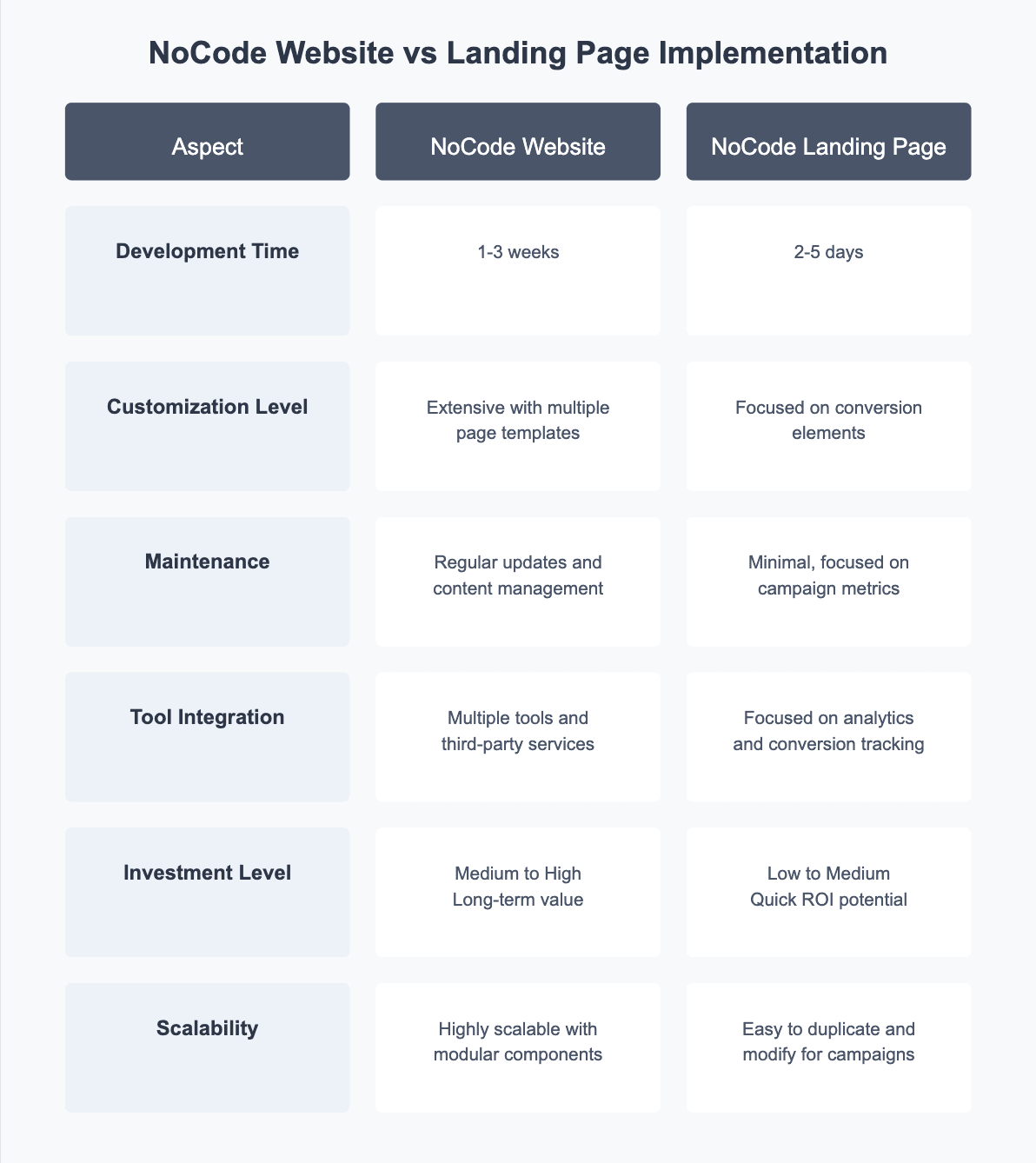
NoCode platforms like Webflow allow users to create websites without requiring any coding knowledge, simplifying the web development process. These tools can significantly lower development costs by eliminating the need for extensive IT resources and using drag-and-drop interfaces to accelerate the design and development phases. Projects like landing pages are also ideal for NoCode development due to their straightforward nature and minimal complexity.
The NoCode advantage includes speed to market, flexibility and control, and cost-effectiveness. The NoCode revolution allows businesses to launch websites and landing pages quickly without complex coding, making it easier for businesses to capture leads and convert visitors.
As NoCode tools become more sophisticated, the possibilities for creating powerful websites and landing pages will continue to expand.
Best Practices for NoCode Implementation
Effective NoCode implementation involves choosing the right NoCode solution based on specific business goals. This section will detail best practices for creating landing pages and websites using NoCode tools, emphasizing the importance of testing, optimization, and performance.
NoCode for Landing Pages
A/B testing allows marketers to compare different versions of landing pages to determine which one performs better. Regular testing can help identify the most effective design elements and content, ensuring that landing pages meet user needs and improve conversion rates. Utilizing templates in NoCode platforms can significantly speed up the process of creating landing pages, making it easier to create high-converting landing pages quickly.
Best practices for NoCode implementation for landing pages include emphasizing conversion, keeping it simple, and testing and optimizing regularly. SEO best practices such as keyword research and responsive design are also essential for optimizing landing pages to ensure they rank well on search engines.
NoCode for Websites
Performance optimization tools are often included in NoCode solutions to enhance website speed and user experience. Using NoCode tools allows for easy scalability of websites, accommodating growing business needs and facilitating the integration of diverse features and functionalities without coding. This enables the creation of multi-page websites with dynamic elements, making it easier for businesses to build comprehensive and interactive online platforms.
Best practices for NoCode implementation for websites include starting with structure, focusing on scalability, and optimizing for performance. These practices ensure that websites built using NoCode tools can grow and evolve with the business, providing a robust and flexible online presence.
Integrating Landing Pages and Websites
Integrating landing pages with a marketing strategy enhances overall marketing efforts and optimization capabilities. Businesses can create seamless customer journeys by linking landing pages to relevant sections of the website, such as a banner leading to a landing page or unique landing pages for different traffic sources. This approach allows for better message alignment and performance tracking, making it easier to generate leads and conversions.
Combining landing pages and websites effectively ensures that visitors have a cohesive experience, whether they are exploring a comprehensive website or responding to a specific marketing campaign. By using both landing pages and websites strategically, businesses can maximize their online presence and achieve their marketing goals.
The Future of NoCode Web Development
With the integration of AI features, NoCode tools are now offering more options for creating websites and landing pages. These advanced capabilities enhance the flexibility and creativity available to businesses, allowing them to design and launch more dynamic and personalized online platforms. As AI continues to evolve, the synergy between AI and NoCode tools will further empower businesses to innovate without the need for complex coding, ensuring they can stay competitive in the ever-changing digital landscape.
Taking the Next Step
Whether you need a comprehensive website or a high-converting landing page, the NoCode approach offers unprecedented flexibility and power. The key is choosing the right solution for your specific goals and working with our experts who understand how to maximize these tools. In the digital age, your online presence is often the first impression potential customers have of your business, so make it count.
Ready to transform your online presence? Contact our Kreante experts by scheduling a free call and let us help you create something amazing using the power of NoCode solutions. By leveraging these tools, you can capture new leads, engage potential customers, and achieve your business objectives step by step. To learn more, visit our blog and stay updated with the latest news.
Frequently Asked Questions
The main purpose of a website is to deliver comprehensive information about a company, its services, and its brand. It’s a powerful tool to connect with your audience and showcase what you offer!
A landing page is a targeted web page designed to drive visitors toward completing a specific action, making it an essential tool for any successful marketing campaign. By focusing your efforts here, you can effectively engage your audience and achieve your goals!
A website fosters long-term customer engagement by consistently updating its content and offering diverse sections such as blogs and service descriptions, keeping your audience informed and interested. This approach not only attracts visitors but also encourages them to return regularly.
The primary goal of a landing page is to encourage visitors to take a specific action, like signing up or making a purchase, leading to greater engagement and conversion. By focusing on clear calls to action, you can boost your success!
Integrating landing pages into your website strategy is a fantastic way to enhance customer journeys by linking them to relevant sections of your site. This not only improves user experience but also boosts conversions!
Go further
Keep reading at the heart of our expertise
Don't let your tech watch stop here. Explore our other resources to master your technology stack.

 Fundamentals