
 Insights & Tips
AI Apps to Build Without Coding: 10 Useful Ideas in 2026
Ten practical no-code AI app ideas for companies, the criteria for choosing a tool, and the signals that it is time to build custom.
KreanteAugust 8, 2026Read the article
Low-code development is a transformative approach to software development that empowers users to create applications with minimal coding expertise

Published on December 20, 2024
· 8 minute read
Low-code development is a transformative approach to software development that empowers users to create applications with minimal coding expertise. By utilizing visual development environments, drag-and-drop interfaces, and pre-built components, low-code platforms streamline the development process. This makes app development accessible to business users, citizen developers, and experienced developers alike. These platforms enable rapid application development while reducing the need for extensive coding knowledge, fostering innovation and agility in organizations.
Low-code platforms provide many benefits, including democratizing app development by reducing technical barriers. This approach allows businesses to respond swiftly to market changes, accelerating development cycles and reducing dependency on traditional development methods.
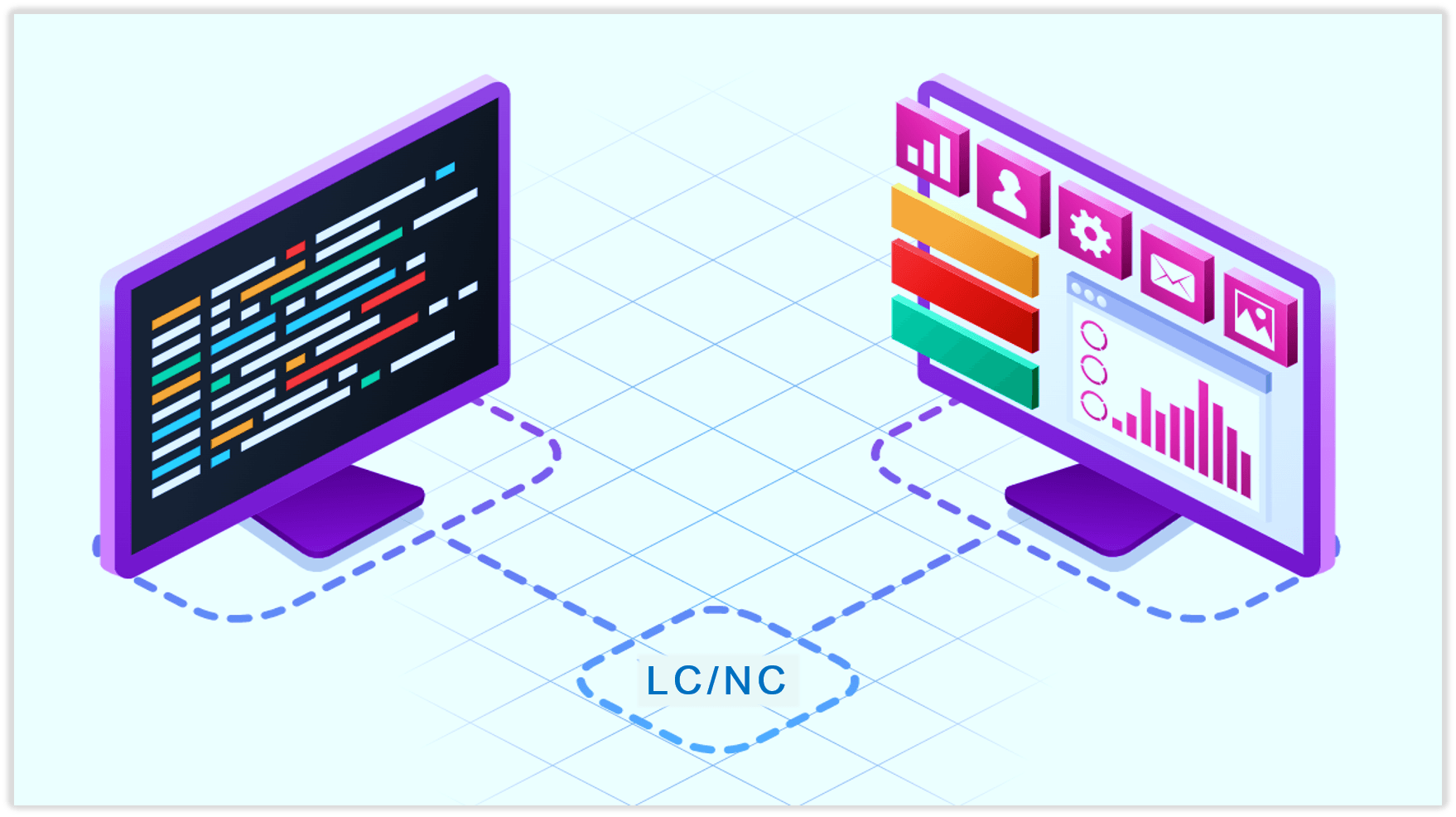
The adoption of low-code development solutions is not just a trend but a strategic response to evolving demands in the tech landscape. Today’s businesses require rapid delivery of digital solutions, competitive edge in dynamic markets, and robust software development practices. Low-code platforms provide the agility to meet these needs effectively.
Low-code development supports digital transformation by enabling developers to build applications faster, adapt to changes more efficiently, and scale applications without traditional complexities. By embracing low-code, organizations can streamline their workflows, reduce development costs, and focus on core business logic.
Kreante leverages low-code platforms to address diverse business needs, delivering customized solutions in various contexts. Here are some of our frequent applications:
When selecting a low-code platform, one of the critical factors to consider is its integration capabilities. A robust low-code platform should offer prebuilt integrations for widely used business applications, as well as the flexibility to create custom integrations. Effective integration services simplify the process of connecting your platform to various systems and datasets, ensuring seamless workflows and data consistency. This capability is essential for businesses looking to integrate new applications with their existing infrastructure, enhancing overall efficiency and productivity.
In today’s digital landscape, ensuring a superior user experience on mobile devices is paramount. When choosing a low-code platform, prioritize those that offer a mobile-first user experience. A mobile-first approach means that the platform is designed with mobile devices in mind from the outset, eliminating the challenges associated with adapting designs and functionalities for mobile use. This approach ensures that applications provide a seamless and intuitive user experience across all devices, which is crucial for engaging users and maintaining high levels of satisfaction.
Security is a top priority when selecting a low-code platform. The best low-code platforms come with built-in security and compliance features designed to minimize vulnerabilities and protect sensitive data. Look for platforms that offer robust security measures such as access control, data encryption, and auditing capabilities. These features ensure that your applications are secure and compliant with regulatory requirements, providing peace of mind and safeguarding your business against potential threats. Prioritizing a platform with a strong security architecture is essential for building reliable and trustworthy applications.
At Kreante, we leverage several LowCode tools to maximize efficiency and effectiveness:
While we continue to use NoCode tools, which are exceptional for building everything from simple prototypes to complex applications, incorporating a LowCode platform into our process allows us to push these capabilities even further. NoCode platforms offer an accessible and efficient way to build robust applications without writing code, making them ideal for rapid development and iteration.
However, as project requirements grow more sophisticated, LowCode platforms provide the additional flexibility needed to customize features, integrate with external systems, and scale applications effectively. LowCode tools bridge the gap between NoCode simplicity and full-code flexibility, enabling us to deliver highly tailored, high-performance solutions that meet specific client needs while maintaining the speed and efficiency that NoCode offers and without the overhead of traditional coding. Here’s how Lowcode tools benefit our clients:
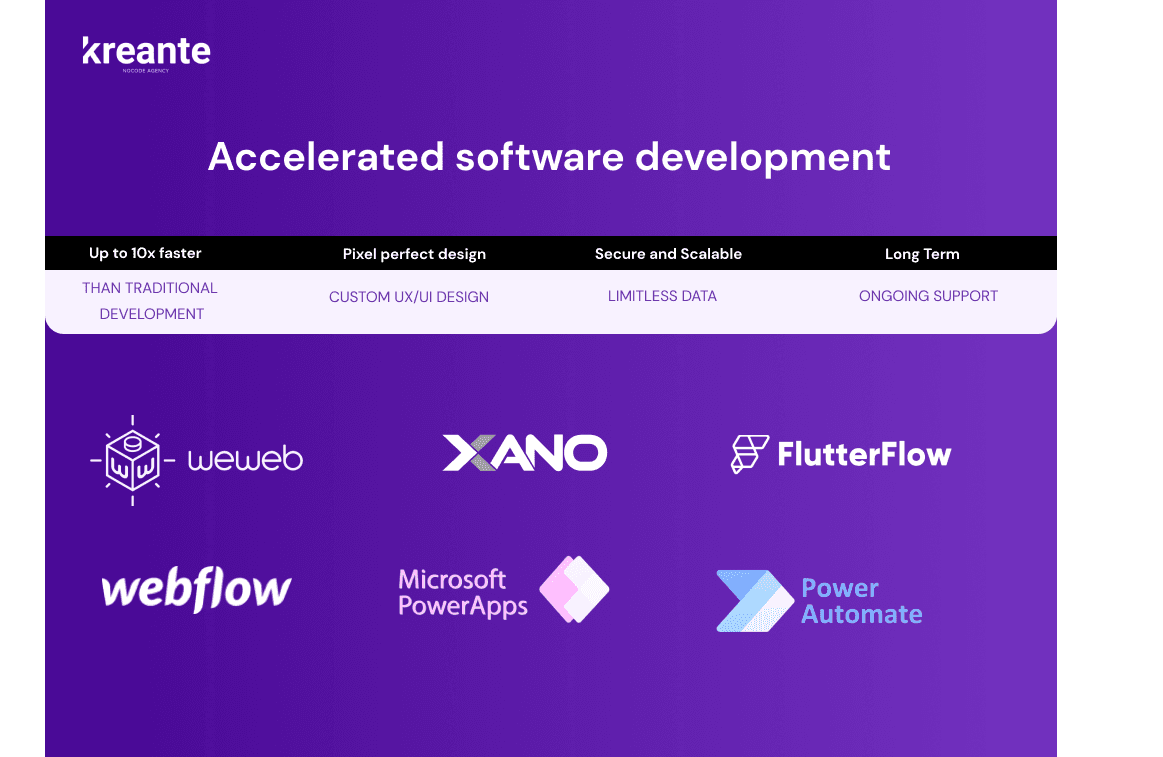
Accelerated software development with Kreante Agency - LowCode & NoCode
Low-code development platforms are set to redefine software development by integrating advanced technologies like artificial intelligence and predictive analytics. These innovations will further simplify app creation, enhance scalability, and improve user experiences. As low-code tools continue to evolve, businesses will gain new opportunities to innovate and remain competitive.
Kreante's adoption of LowCode development empowers us to deliver superior solutions quickly and cost-effectively. By choosing LowCode, we ensure that our clients receive high-quality, secure customized applications that are built to scale and adapt as their business grows.
Go further
Don't let your tech watch stop here. Explore our other resources to master your technology stack.
Insights & TipsTen practical no-code AI app ideas for companies, the criteria for choosing a tool, and the signals that it is time to build custom.
 Tools
ToolsCompare Chargebee, Recurly, Stripe Billing, Zuora and Maxio, and pick the subscription billing platform that fits your biggest operational risk.
 Tools
ToolsImplementing AI in a business requires a practical roadmap that addresses real operational challenges. This article presents 25 actionable strategies informed by experts in the field, covering everything from marketing automation.